
Table of Contents
.
Now that you have a better understanding of what a Community Needs Assessment is and why it is important to conduct a full, comprehensive assessment at your agency, you may need to consider a new way of thinking about and doing your CNA.
Community Needs Assessments involve one of two levels of effort, with the difference depending on whether or not it is time for a new multi-year strategic plan. The two types of activity are:
- Level 1: A comprehensive community assessment that contains all the information a CAA will need to prepare a new multi-year strategic plan.
- Level 2: An update of the information that the CAA gathered in an assessment conducted within the past two years, if an up-to-date multi-year strategic plan is in place.
We will cover Level 1, the comprehensive assessment over the next several pages.
For most CAAs, the comprehensive assessment will require thinking about needs and resources in a more comprehensive framework. It will mean connecting causes of poverty by collecting more data. It cannot be achieved by a survey of CAA customers’ satisfaction with services currently received or by asking customers what services they need. It also cannot be achieved by only updating economic and social data that are part of a community’s statistical profile. These narrow approaches do not assess the entire community, and thus fail to identify all available assets and resources. A comprehensive assessment requires analyzing and synthesizing many kinds of information.
.
As you begin working your way through the next several pages as a guide to a comprehensive community assessment, consider how this entire process will be beneficial for your agency and your community. Engage your staff and partners in discussions about the community assessment requirements and how the data gathered will be used to inform strategic planning, goal setting, and decision-making. Then use these early conversations to educate your stakeholders and generate excitement about the benefits of conducting a community assessment.

.
This guide is intended to spark local and state discussions about methods of conducting assessments. Use the various steps, worksheets, samples, and other resources to stimulate your agency and its partners to look at many options for capturing and using information. Its ultimate purpose is to equip your Community Action agency, its leadership, and its staff with the ability to adopt a broad vision of your community’s future and how to plan for your CAA’s role in bringing it about.
This guidance comes directly from NASCSP’s Guide to Comprehensive Community Needs Assessments.
.
.
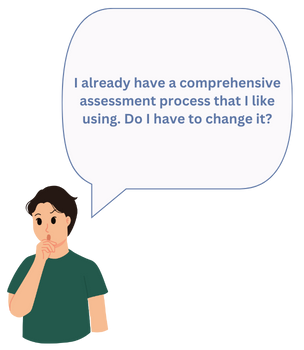
Not necessarily. This guide will offer a yardstick for comparing the CAA’s current assessment system to some sound ideas on analyzing comprehensive information to support periodic strategic planning. The comprehensive reassessment should always precede a strategic planning phase; in between plans, updating or expanding the data using current processes may be more appropriate.