
Table of Contents
Saginaw County Community Action and federal funds offered relief and hope to residents with unpaid utility bills
Corey was receiving disability payments and trying to make ends meet, but he fell behind on his water and electric bills. The timing was bad. COVID-era moratoriums that prevented utility shut-offs had been lifted and Corey was on the list to have both his water and electricity disconnected.
Amanda fell behind, too, and her water had already been shut off. She struggled to care for her young children, and the desperate situation left her unable to focus on finding employment.
Corey and Amanda were just two of many Saginaw County residents facing shutoffs.
“Based on our 2022 Needs Assessment for Saginaw County, we knew that emergency assistance, which includes utility payments, was in the top five concerns reported by residents,” says Hurley J. Coleman III, CEO and executive director of the Saginaw County Community Action Committee (SCCAC.) “At that time, residents who were behind in paying water bills still had water because the moratorium on utility shutoffs was still in place. But when Saginaw and other municipalities announced that the moratorium was lifted, residents with unpaid bills began receiving notices that their water would be shut off.”
Fortunately, funds had just been allocated to Community Action agencies from the state of Michigan for a Low Income Household Water Assistance Program (LIHWAP), created to ensure that residents whose services had been disconnected due to non-payment, or were about to be disconnected, could have their bills paid and services restored swiftly.

Hurley J. Coleman III, Saginaw County Community Action Center
SCCAC staff, community partners, and municipalities promoted the available of LIHWAP, and residents were encouraged to contact SCCAC if they needed help. As each client was registered for the program, SCCAC staff contacted their water supplier and asked that the client be added to a “no shut-off” list.
“Because of the relationship we have developed with municipalities, and on the strength of our reputation, officials knew the water bills for those clients would get paid,” says Mr. Coleman. “We have established that our word is good. That is the power of Community Action.”
SCCAC had been reaching out to the Hispanic community through its leadership to be sure those who need assistance were receiving it, and that’s how Amanda knew to contact SCCAC. Because she had young children at home, her need for water was designated a high priority emergency.
“The caseworker gathered information to be sure Amanda qualified for assistance under LIHWAP,” explains Mr. Coleman. “Then they called the township she lived in to get her water turned on, with the promise that we would pay Amanda’s outstanding water bills.”
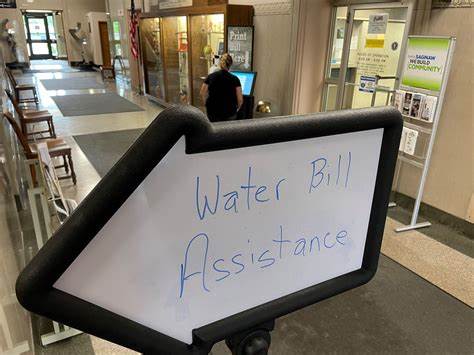
Community Action ensured Saginaw residents could have their water bills paid and services restored.
That eased the trauma Amanda faced, trying to raise her family with no running water, and she was able to focus on finding work.
“We became an effective resource to the residents and also to the municipalities,” says Mr. Coleman. “We stopped turn-off notices, and the municipalities knew the deficit bills would be paid. It was a win-win!”
As LIHWAP was coming to a close, SCCAC issued another appeal to the community hoping to reach anyone who still needed help.
Corey was one of the last residents to apply.
“He did not think we could assist him in time,” remembers Mr. Coleman. “He believed we were too busy and that there were too many others in line ahead of him. But once he connected with us, we got him an appointment quickly. We got past-due water bills and his past–due electric bills paid, which allowed Corey to pay other bills and get back on his feet.”
“Many people struggle with the ability to reach out for help,” says Mr. Coleman. “They think they’ve got the problem handled or they can work it out, until it is overwhelming and they realize they can’t do it alone. At some point, they share their need with somebody — a friend, a pastor, or maybe they see our information on Facebook, and they finally call us. Often, we can help them when no one else can. It’s so rewarding to be able to do that for our clients.”
On average, it takes 21 to 30 days from the time a client meets with a caseworker until the bills are paid, but the hold on their shut-off notice happens quickly. Corey said the process went smoothly.
To assure that Corey can stay up-to-date on his bills, his SCCAC case manager did “triage” on his situation to determine what other services he needed. The case manager will continue to follow-up with Corey to see how he is doing.