
Table of Contents
Rural Challenges

Michigan’s rural residents constitute roughly one quarter of the state’s population, but they are spread out over more than 90% of the state’s land, according to the Citizens Research Council of Michigan. While living in rural areas can be more affordable on one level, agencies working with rural residents say the complications can be enormous. Mobility and access are always an issue for those without dependable vehicles or proximity to public transportation. For families in rural communities, those factors alone can be a significant barrier to being able to achieve financial independence. Lack of transportation impacts everything including the ability to get to work on time or at all, access to medical care and community resources, availability of grocery stores and food pantries, and much more.
“Our geography is something we try to overcome in providing services,” says Lisa Bolen, director of Northeast Michigan Community Service Agency, expressing a reality faced by many in community action. With few organizations located in rural areas working to meet the needs of rural residents, those residents have few options for assistance, and the organizations are often far from where residents live. Adding to the difficulty is a lack of access to public transportation and lack of high speed internet or cell service.
Lisa says the biggest hurdle her agency’s rural clients face is lack of access to health care, and it impacts even the youngest residents. In her region, which includes eleven counties covering 6,300 square miles, only three hospitals deliver babies.
“Many of our emergency rooms see moms who are ready to deliver and have not had prenatal care,” she observes. At the other end of the spectrum is the older population in her region especially men and women who struggle with diabetes, pre-diabetes and other chronic conditions. COVID testing, too, has been a problem. Some residents in her region live 45 miles from a testing site. Those factors combined with a lack of internet connectivity, which often resulted in no easy way to sign up for the vaccine, and a lack of transportation to get to vaccination locations, contributed to the virus gaining a foothold.
Michelle LaJoie, director of Community Action Alger Marquette, offers KI Sawyer Air Force Base as another example of the transportation dilemma. Once used as an airport, there are rental units available on the base, as well as homes that can be purchased. But the base is isolated, and there is no reliable transportation that will enable residents to get to other parts of the county for work, shopping or appointments. The area is also a food desert. The only nearby choice for groceries is a small store with limited inventory and high prices.
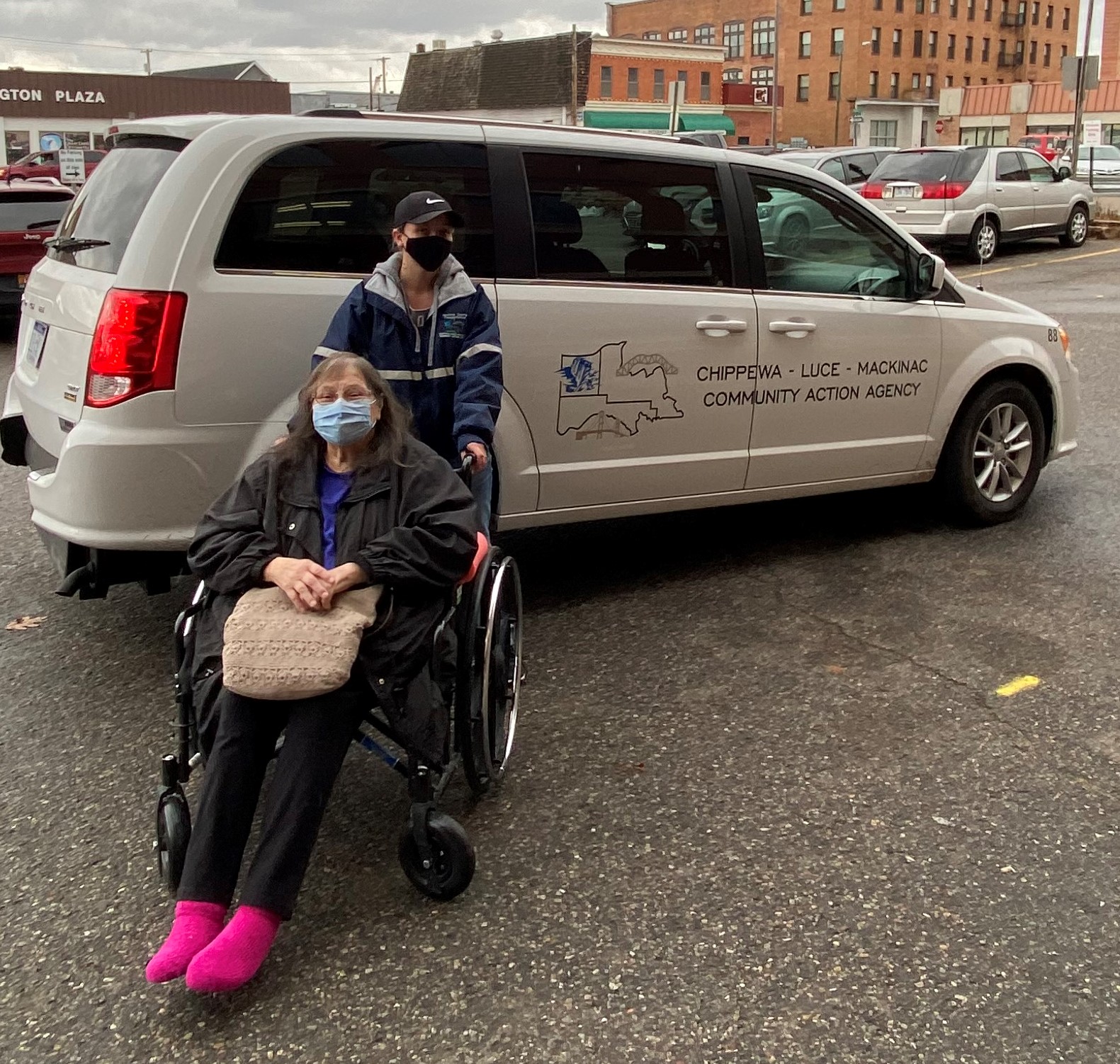
Community Action Alger Marquette has a transportation program that makes it possible for a person to get a ride to the doctor, but arranging a ride home can sometimes be difficult. Some organizations offer rides with volunteers, but those, too, can be undependable. Thus, the housing on KI Sawyer Air Force Base is available but, for lack of dependable transportation and nearby resources, it is not practical.
“Why should we place struggling families where they will struggle more,” says Michelle LaJoie, “and it will cost them to pay a friend for a ride or to pay for a cab?”