
Table of Contents
Serving those without a place to live
“Everybody deserves to live in a home. There’s no way around that. That challenge belongs to all of us.”
Melinda Johnson, Blue Water Community Action

Many homeless men and women were very self-sufficient before the pandemic, says Melinda Johnson, Blue Water Community Action, which serves the residents of St. Clair County. In fact many were not even on the radar of human service organizations. But COVID drove them out of the shadows.
The stores and restaurants with bathrooms that homeless individuals had been using were closed. They couldn’t step into a shop to buy a cup of coffee and get warm. And opportunities previously open to them to eke out a small living no longer existed. The plasma center stopped taking donors. With few people out walking or driving, there was little opportunity to ask for spare change. Even the supply of discarded returnable cans and bottles they could usually collect and redeem dried up. Dozens living on the streets of St. Clair County at the end of March 2020 found themselves not only homeless and hungry but with no way to wash their hands or protect themselves from the virus.
When staff at Blue Water Community Action learned about their urgent plight, they appealed to a community partner who owned a local hotel. He offered the organization an entire floor of rooms. Within days, individuals and families were housed there, one household in each of the 14 guestrooms. An additional room accommodated a Blue Water staff person who was in constant contact with the residents to assess their medical welfare, deliver daily meals and snacks, and offer help as needed.
Melinda also brought in practitioners from St. Clair County Community Mental Health to assist some of the residents. Blue Water staff members met with each household to assess their needs and resources and discuss short and long-term goals with them. They also helped residents obtain personal documentation if they did not have it.
Not everyone could cope with the rules, but those who stayed were grateful for the support.
Success
There were many success stories. Melinda Johnson tells of a resident with a history of substance abuse who got sober when he moved into the hotel. Blue Water Community Action was able to provide him with a tablet so he could join a support group online. Staff made it possible, with comprehensive casework, to move several residents into semi-permanent housing, including mothers with children.
In the Upper Peninsula region covered by Community Action Alger Marquette, several churches participate in Room at the Inn, a revolving winter shelter for those who are homeless. Each church houses individuals and families for a week. After COVID hit, shelter operations were moved to the Lakeview Ice Arena so people could social distance.
Community Action Alger Marquette is the lead agency for homeless services in the region. It partnered with the Salvation Army, which provided meals to residents of the shelter along with other services. Like so many COVID-era shelters, health concerns required restrictions, such as mandating that guests remain in the shelter at all times. If they left and returned, they had to go into quarantine. Not everyone admitted to the Lakeview Ice Arena shelter could cope with the rules. Still at peak, thirty men and women found welcoming warmth and care there. Families were placed in motels.
The housing market in Macomb County, as in many other parts of the state, has been tight. Ernest Cawvey, Macomb Community Action, says the occupancy rates of rentals is high, so the agency has been using hotels to shelter homeless people, something not done in the past. “Incorporated in our housing program were components such as extra security and cleaning protocols,” says Ernest, “and some businesses gave us reduced rates for prolonged occupancy.”
Many community action agencies experienced challenges as they endeavored to keep people in shelters during the pandemic. Special quarantine facilities were needed for adults who had been exposed to the virus, those who tested positive for it, and those already experiencing symptoms. Agencies across the state were able to house many people in hotels and motels, when they needed to be isolated, and that worked well until the tourist season began, causing hotel costs to skyrocket. Helping people who are homeless continues to be a priority and a challenge for many community action agencies as they sort through options.
Eviction diversion and support for tenants and landlords
Shortly after mass layoffs and business closings occurred in spring of 2020, when landlords were struggling under the weight of non-paying tenants, MCA began hearing from people who were suddenly having wages garnished for rent that was unpaid during the recession, 12 years earlier.
While that money is owed to the landlord, landlords can’t collect if their tenants don’t have the money. If people have a judgement against them regarding what they owe, but they can’t pay it at the time, and then later they get work, the landlord from years earlier can garnish current day wages.
Landlords are small businesses, too, and their stability affects the local economy. Many agencies are hoping they will be able to help landlords with emergency rental assistance to prevent tenants from being evicted or having wages garnished and to get landlords the rents they are owed.
“The need for funding for eviction diversion and rental assistance was so great, and the money went quickly,” says Kerry Baughman, Northwest Michigan Community Action Agency. “For a while, the deadline for the moratorium on eviction was a moving target. We never knew when it would be lifted. We pumped about $800,000 into the community, which gave landlords the support they needed as well.”
Partners for Success
“Our agency was the fiduciary, but we knew we couldn’t do it all,” says Michelle LaJoie, Community Action Alger Marquette. “We partnered with an agency providing services to the aging. They have mediation services, which eliminated the need for many people to have to go before a judge.”
The result: Community Action Alger Marquette helped stabilize 234 households in the central ten counties in the Upper Peninsula between October and the end of December 2020. They also provided financial assistance to a number of small-business landlords.
Susan Harding, Oakland Livingston Human Service Agency, says the most significant need in her region was for rent and mortgage assistance – the most frequent request and the most expensive. About 80% of the agency’s CARES funding went to rent and mortgage assistance, a number that reached $250,000 in December 2020 alone. The agency also provided assistance from the Community Foundation of Southeast Michigan to dozens of small businesses including restaurants, small service industries and small stores.
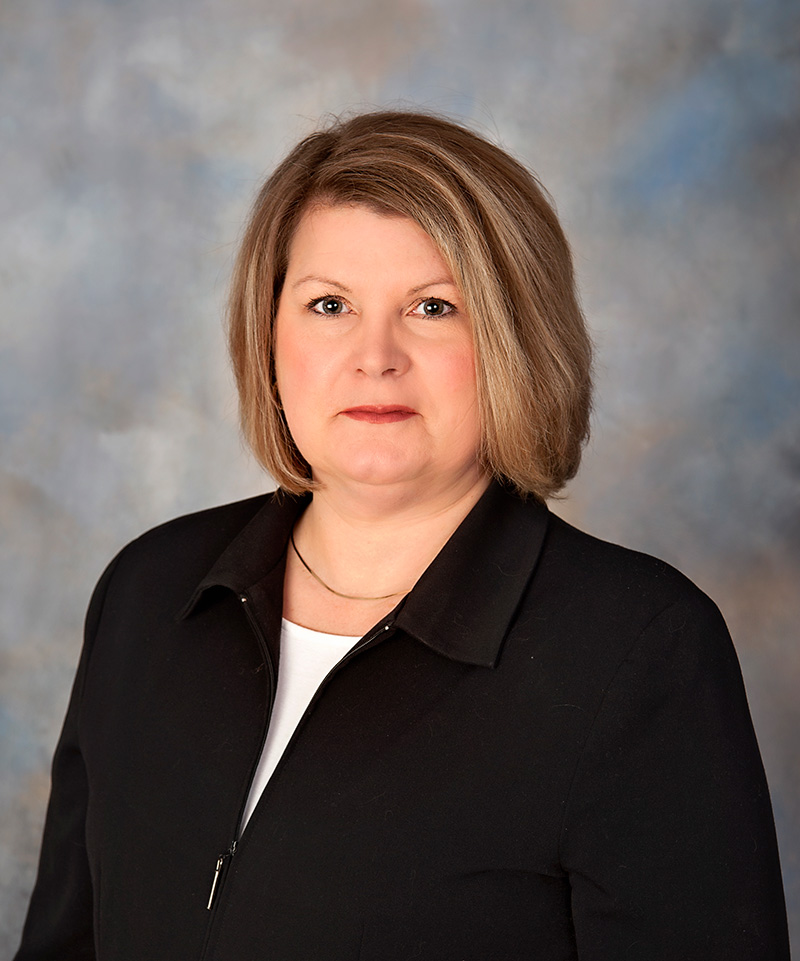
Michelle LaJoie, Community Action Alger Marquette
“It’s a trickle down,” says Susan. “If the landlord loses the property, the tenants will be out anyway.”
Melinda Johnson, Blue Water Community Action, concurs. “We’ve seen tenants who could not pay rent and landlords who struggled as a result. We wanted to keep evictions off peoples’ records. In four-and-a-half months we made more than $600,000 in payments directly to landlords. The need is still going on, and now we’re seeing homeowners who are struggling. Before the pandemic, homebuyer education was going up and foreclosures were going down, but we’re seeing an increase in foreclosures again. We don’t have a dedicated allocation for mortgage payments. This is another case were flexible funding would help or funds that could include help with both rent and mortgage payments, since part of the funding is designed to get money back into banks.”
The organization’s eviction diversion program also created a partnership with the large landlord association, which Melinda says will yield benefits for years to come.
“We’re developing relationships so that when we have a person who is homeless or about to be, we can call on a landlord for help to place that person,” she explains. “We used to have a small number of those landlords. Now we have a lot of them, and the number is increasing every day.”
For Lisa Bolen, Northeast Michigan Community Service Agency, the numbers tell the story. During fiscal year 2020, Northeast Michigan Community Service Agency spent more than $81,000 through the Emergency Solutions Grant to assist 36 households facing eviction. In just four months, from September 1, 2020 through the end of December, this agency assisted 163 households through the Eviction Diversion Program. Total cost of that assistance: $474,431.
Impacts of personal debt on having a place to call home
For some, personal debt is continuing to grow, and many worry they will never be able to move out of homelessness, especially those who suffer from health crises such as the lingering effects of having contracted COVID. Of particular concern is the impact that lifting the eviction moratorium will have on those who have not been able to pay rent. With no ability to pay back what they owe, and few landlords in a position to forgive debt, it is feared there will be a wave of families left homeless after being evicted or foreclosed on. Having a bad credit history will also complicate housing options in the future for them. And agency directors believe that the shortage of affordable housing, evident in many communities before the pandemic, will only get worse.
Ensuring Access to Water
The three-county Southwest Michigan Community Action Agency is largely rural and has a high percentage of elderly residents on fixed incomes living in older homes. That combination can be life-altering when any aspect of the resident’s water system develops problems. When the agency launched a Coronavirus Relief Fund Water and Plumbing Program, it received 50 applications for assistance.
“One senior on a fixed income had not had hot water for the last two years,” says Kim Smith Oldham, Southwest Michigan Community Action Agency executive director, recalling one of the many stories that surfaced. “With help from our agency, the client no-longer has to boil water to wash dishes or to take a bath.”
Another senior had not had running water in her home for six months because of issues with her well. Friends brought her water by the gallon. She was told by her township that she had to hook up to township water. It would cost $8,000, money she didn’t have. Southwest Michigan Community Action Agency made it possible for her to have running water again.
The program had enough funding to assist 42 households with well, septic, drain field, and in-house plumbing issues. Kim estimates that one hundred or more households in her region are without functioning water systems
CARE-ing About Water

Community Action Alger Marquette also used CARES funding to fix septic systems and replace hot water heaters and wells, and administered a program to cover unpaid water bills in order to prevent water shut-offs for families. The funds were especially helpful in bringing water bills up to date for many households early in the pandemic when unemployment was high.
FiveCAP, Inc executive director Mary Trucks can recall dozens of homeowners in her four-county region who were coping with major water problems in fall of 2020. Among them were a disabled veteran and his school-aged daughter had lost the source of water to their home in 2019 when the casing on their well failed. It could not be fixed and they couldn’t afford a new one. She also tells of a family who had been living without running water in their home for five years after their well went dry.
“So many of our rural residents have an annual income of less than $12,880, the federal poverty level,” she explains. “Often they’ve inherited their rural home or they bought it on a land contract. They have a place to live, but they don’t have the wherewithal to make expensive repairs or to replace things such as the well or septic tank. Most of the residents are elderly or disabled or both, and their only income is social security.”
They are resourceful. They haul in jugs of water filled at the homes of friends or relatives who may let them shower there too. Some have access to a shower where they work or they use facilities at a local senior center. Others, in warm weather, use the outside faucet at gas stations to shower and wash clothes. Rainwater is collected for washing dishes. Left-over wash water is used to flush toilets.
The FiveCAP Community Needs Assessment estimated that two hundred households in the agency’s service area lacked complete plumbing. Living without water is, without question, a hardship. But COVID escalated the problem to a critical matter of health and safety.
Plumbing the Community’s Needs
In August 2020, FiveCAP received $115,000 in federal COVID-19 relief funds to address plumbing and water issues of low income homeowners. Marisela Lugo-Gonzalez, director of FiveCAP’s weatherization and housing program, began making phone calls to well-drillers and plumbers, knowing their schedules were already full and that the grant expired December 31.
“The response from contractors was very gratifying,” says Marisela. “They understood the urgency. They know FiveCAP and what we do for the community’s residents. They wanted to make time for our clients and get the work done.”

Twenty-seven clients living under the federal poverty level were approved for the program, and work on their wells, septic systems and indoor plumbing began in October. Some households needed new wells that had to be dug to a depth of 200 feet, at a cost of more than $9,000 each.
November and December were mild so the outdoor work continued. The grant was extended to February 15, and when January rolled in warmer than average, the contractors continued working. Then a Polar Vortex descended in early February, abruptly pushing Michigan’s temperatures into single digits. The ground froze. Work stopped.
Twenty-one grateful households had running water, working septic systems and plumbing that met building codes. The program changed their lives.
“When we think about water issues faced by people with low incomes, we usually assume they can’t pay their monthly water bill,” says Trucks, “but rural residents have to maintain a well and septic system or go without. They don’t have the option of hooking up to municipal water and sewer lines. They often have conditions of poverty that are hidden, and this program brought to light what they have to do to get by.”