
Table of Contents
Response: Food
“We believe people are resilient. We link them to partners who can help them. We advocate for them and teach them how to advocate for themselves. We want everyone to have opportunity. We’re finding new ways to meet new and growing needs and collaborating with other talented organizations and funders that make the impossible possible.”
– Elena Steele, OLHSA
Food Needs
Food is one thing in our lives we need to constantly replenish. It gets used up quickly, and when it’s gone, we have to get more. It is that simple. For most community action agencies across Michigan’s two peninsulas, food quickly topped the list of their residents’ greatest needs.
Getting food to individuals and families became a priority across the state. Driven, in part, by sudden skyrocketing unemployment and layoffs, the number of households requesting food quickly shot up to levels many regions experienced during the 2008 recession. Agencies assessed their resources and evaluated how they could best serve their clients.
“The need for food and the willingness of people to line up for hours before a food distribution was one of the most heartbreaking things I saw,” remembers Melinda Johnson, executive director of Blue Water Community Action. Food vulnerability has always been a factor in her region, and during COVID, it became more critical.
The acceleration in requests for food experienced by Community Action of Allegan County typifies that of many other agencies. In February 2020, CAAC distributed food to 77 households. In March 2020, it distributed food to 683 households. On April 6 and 8, food was distributed to another 328 households. And that was just the beginning.
In April 2020, Northeast Michigan Community Service Agency, which serves residents across roughly 6,200 square miles in eleven counties, reported a 46% increase in food distribution and a 76% increase in requests for home-delivered meals to those who were quarantined at home, at risk because of age or health, or who didn’t have transportation to a food pantry.
Adapting
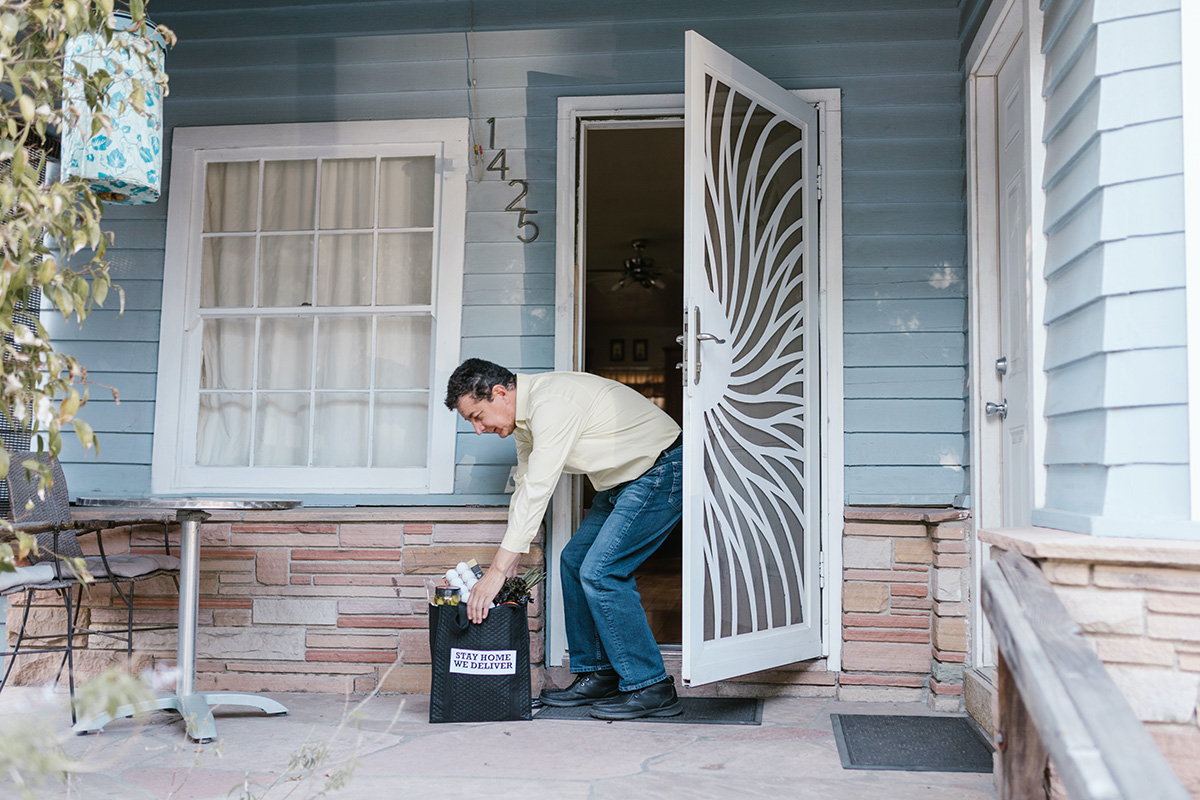
News reports warned that the elderly and those with serious health conditions had a high likelihood of suffering complications or death if they contracted the virus. Afraid of those consequences, tens of thousands of residents across the state who fit that profile of “most vulnerable” wanted to remain in the safety of their homes. Many were too uncomfortable to even go to the food pantries they depended on, but still, they needed to eat. In response, agencies began packing food boxes and delivering them to clients’ doors, leaving them for clients to bring inside once the delivery person was several feet away. Other clients were comfortable going to a pantry but only if they didn’t have to go inside to get the food. In response, many agencies prepared boxes of groceries that could be put right into a client’s car.
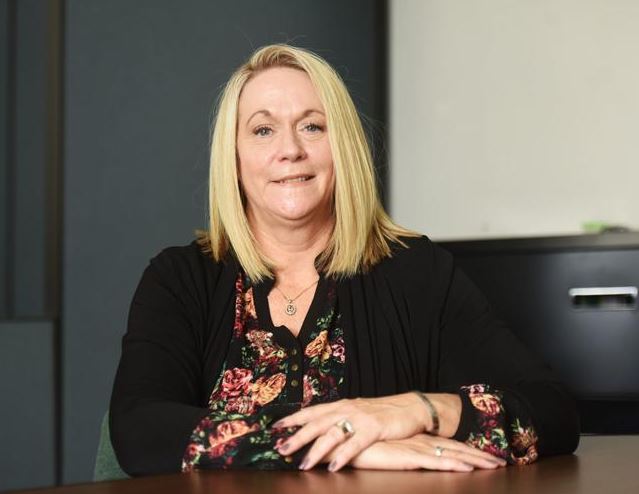
Kim Smith Oldham, Southwest Michigan Community Action Agency
“We knew there was going to be a need for food and possibly an increase in food costs,” says Kim Smith Oldham, Southwest Michigan Community Action Agency. “So we started reaching out to people and holding extra food giveaways.”
Boxes of groceries that included meat, dairy products, canned goods, noodles and other staples, were placed in the trunks of people’s cars, not the back seats. Sometimes other items were included such as masks or energy efficient light bulbs that had been donated. Most gratifying, says Kim, was the number of community residents, suddenly laid off or working from home, who volunteered to help with food distribution. One elected official donated a truckload of fresh vegetables. Church volunteers packed and handed out food. In one community, many residents donated money to purchase food in the name of a much-loved volunteer referred to as the “ringleader” of the food program there.
The response, says Kim, “…was overwhelming, amazing.”
Macomb Community Action serves more than 200,000 residents a year and is at the center of food distribution in the county. Each year, it supplies more than 50 pantries plus groups, such as shelters for the homeless and Vets Returning Home, with approximately 1.8 million pounds of food. By May 2020, many of Macomb Community Action’s partners were reporting substantial increases in requests for food – some as high as 200%
Typically, the agency delivers the food on pallets. Volunteers then sort it, and clients come to the pantries to choose what they want. COVID changed all that. Executive director Ernest Cawvey says they quickly adopted new procedures so they could still support the pantries and get food into households
“We immediately began providing pantries with emergency boxes containing a selection of groceries instead of large pallets,” he says. “They could better accept them and distribute them.”
Critical to keeping people safe, clients didn’t have to come into the pantry to make food selections and volunteers were not needed to sort the food. Clients simply drove up and volunteers put an emergency box in their car. The plan worked well, though Cawvey says it is not ideal for the long term.
“We believe it is best when clients can choose what they want,” he says, “and we will return to that.”

Ernest Cawvey, Director of Macomb Community Action
Chippewa Luce Mackinac Community Action Agency, based in Sault Ste. Marie, implemented weekly drive-through food distribution. Staff also called to monitor the needs of seniors and provided frozen prepared meals for them every seven to ten days, depending on the location of the household. For their ongoing quarterly food distributions, they had ten sites scheduled on June 9 and 10.
Oakland Livingston Human Service Agency began a bi-weekly Gleaners Community Food Bank distribution to get food into the hands of families and children. At each event, as many as 550 families received a two-week supply of healthy balanced meals.
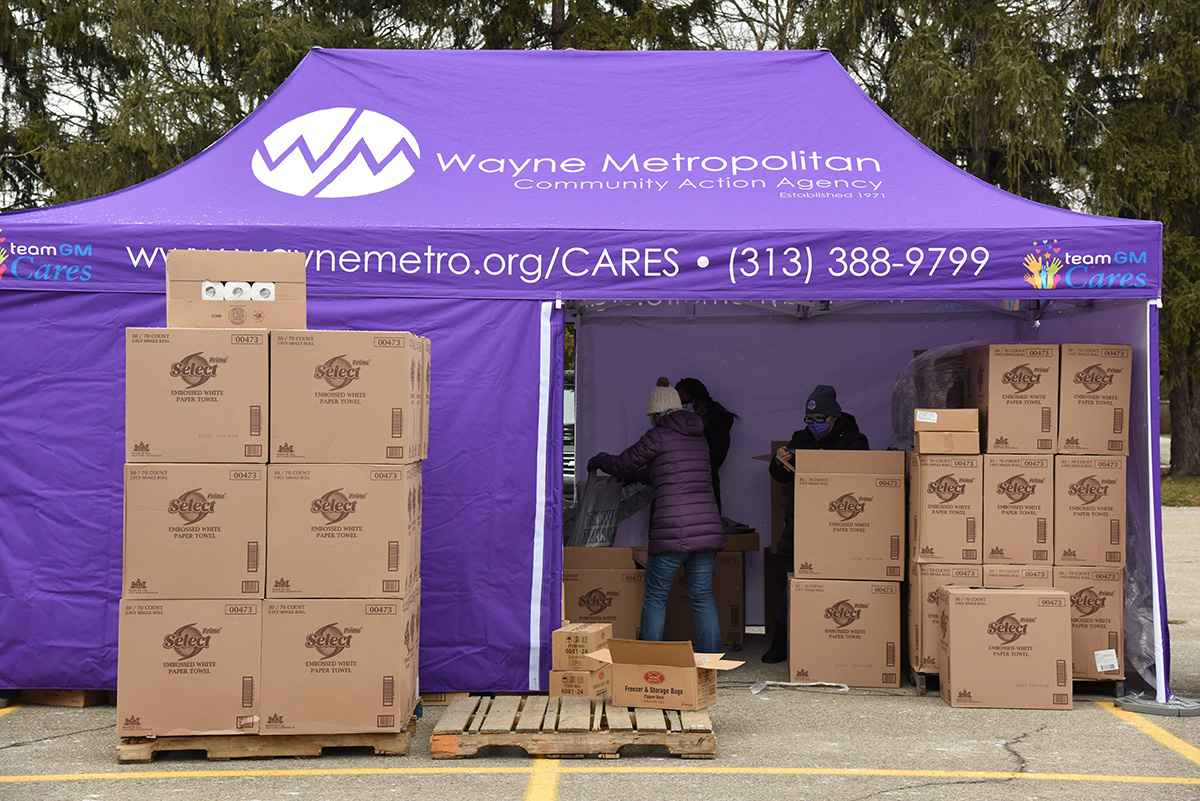
In addition to the regular daily and weekly programs held by Wayne Metropolitan Community Action Agency to help support low- and moderate-income residents, the agency began distributing “quarantine meals,” which were complete breakfasts and lunches for children.
New Food Challenges
As the virus spread, a new wrinkle surfaced. Families exposed to COVID or experiencing symptoms had to quarantine in their homes. Since they were unable to shop for groceries or go to a food distribution location, the practical answer, though not always easy, was for agencies to deliver food to their door.
Northwest Michigan Community Action Agency saw a 34% increase in the number of meals delivered by its Meals on Wheels program between mid-March and the end of April 2020. Because of the number of seniors homebound in order to stay safe, Meals on Wheels became key to getting food to the expanded list of those who needed food delivered to their door. Meals on Wheels drivers served a similar role in several other regions, too.
Grants & Gifts
Grants and gifts became essential to providing funds for the volume of nutritionally balanced meals and supplies needed throughout the state.
“Grant funds allowed food pantries to purchase supplies that they aren’t normally able to, such as high protein foods and foods that are easy to prepare for those with limited resources,” says Michelle LaJoie of Community Action Alger Marquette. When they partnered with the County of Marquette, it received a grant and purchased 784 cases of food that were delivered to pantries in five Upper Peninsula cities near the end of 2020. The timing was perfect. Those deliveries made it possible for pantries to replenish their shelves following the holidays, when their supplies are typically depleted.
A grant for $450,000 from Consumers Energy Foundation that was distributed to eight community actions agencies was especially helpful. Kerry Bauman, executive director of Northwest Michigan Community Action Agency had her agency’s portion of the grant earmarked for a forklift.
“It’s a game changer in the massive effort to get food out of our organization’s warehouse in Cadillac, into distribution sites throughout Northwest Michigan, and eventually into the hands of those who need it most,” she explained. “Without it, our crew would have to load and unload over one million pounds of food a year – manually.”
Lisa Bolen, director of Northeast Michigan Community Service Agency, anticipated spending some of the Consumers Energy grant on equipment and supplies they needed to be able to get assistance to people while minimizing everyone’s exposure to the virus – clients, volunteers, and staff. She also looked at ways to stretch resources over the next two years so her agency can, “… respond to the far-reaching impacts of the virus and be prepared for the long haul.”