
Table of Contents
Rolling Out Plans

Community action agencies, already tuned to watch for changes in their communities, took seriously the early warning signs and dire predictions from global health specialists. Some, like staff at the Menominee Delta Schoolcraft Community Action, rolled out a plan they had created before the stay-at-home order was issued. Many consulted with community partners to determine how to identify and address emerging and urgent needs of their residents. Very quickly, agencies and their teams were finding creative new ways of doing business.
Lisa Bolen, executive director of Northeast Michigan Community Service Agency observed, “The beauty of community action is that we’re nimble.”
To comply with the state directive and to help keep staff members and clients safe, most directors instructed staff to take what they needed from their offices and work from home. It was a largely unanticipated move that required quick assessment of the technological capacities of the staff, the organization and the region. It was imperative that staff be able to continue to connect with each other, with new and existing clients, and with partners and community resources.
While most agencies transitioned with few bumps, the adjustment was unquestionably huge. “We are a human service agency,” says Michelle LaJoie, Community Action Alger Marquette. “I did not envision not being able to see clients face to face. That was the most difficult aspect.”
Many agencies had to purchase significant numbers of computers and printers for staff to use at home, and then had to carve out time to train staff on the technology needed to hold virtual meetings and other procedures that were not necessary before the pandemic.
At the same time community action agency employees across the state were adopting new ways of working, many were also dealing with their own personal virus-related challenges.
Staff taped signs on agency doors and passed out fliers giving phone numbers and website links. They updated information on their website and social media platforms to walk viewers through the process of getting assistance. Facebook became an effective way to reach those with internet service. Churches shared information with their congregations. Some agencies handed fliers to those getting COVID tests. Staff and board members gave virtual presentations to groups they belonged to.
Susan Harding, executive director of Oakland Livingston Human Service Agency tapped into a network of organizations and volunteers that formed a central hub called My COVID Response where people could call to get information.
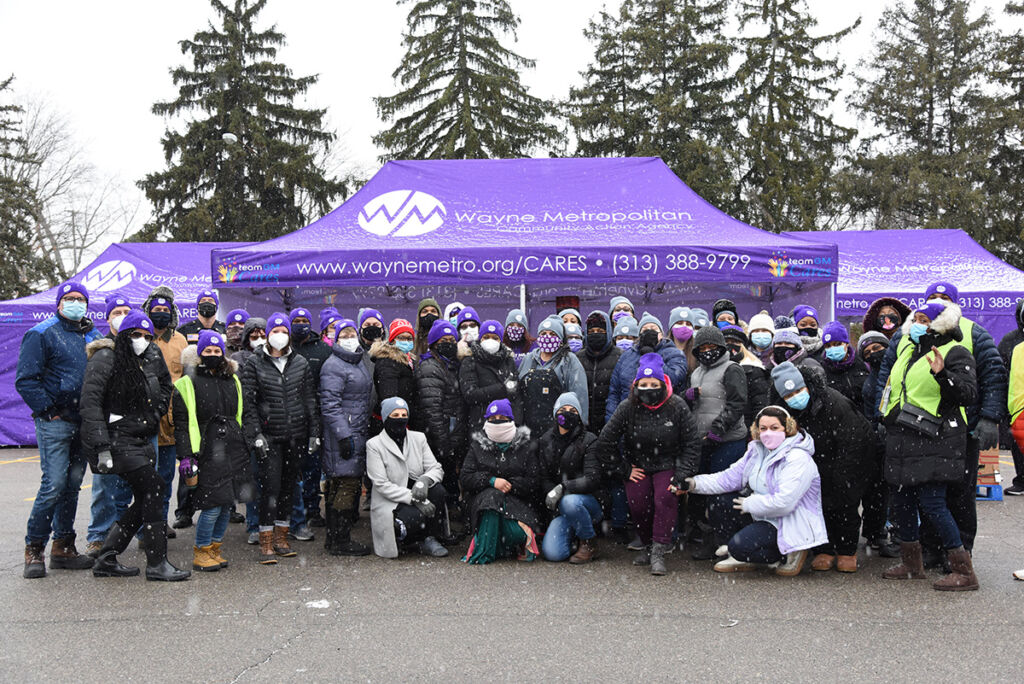
On April 27, 2020, Wayne Metropolitan Community Action Agency (Wayne Metro) launched a new initiative called CARES Relief and Recovery Services. Within 24 hours, the organization received approximately 1,500 new applications for assistance in six categories: food and income, rent and mortgage, water and energy, property taxes, emergency plumbing, and funeral expenses.
Coordinating with 211 also became an effective way to get information to clients. The easy-to-remember number connects to a national network staffed 24 hours a day. Each year, trained specialists respond to more than 14 million callers requesting help with basic needs such as housing, food, and transportation. The specialists provide them with resources for health and human service agencies in their area.
211 also gathers statistical data from calls and web visits to help shed a light on the nature of needs locally and across the country. Kim Smith Oldham, executive director of Southwest Michigan Community Action Agency used the 211 database to assess her region’s greatest needs. For Southwest Michigan residents, food, rent and utilities remained at the top of needs throughout 2020. Kim says the 211 data will be helpful for planning purposes.
Recognizing that families all over the state were suddenly hunkered down in their homes, Michigan’s Bureau of Community Action and Economic Opportunity issued a news release with tips to help people reduce home energy costs and improve the air quality in their residences.
One casualty in the normally smooth process of getting assistance to clients: volunteers. Many were over 60, the age group deemed most vulnerable to experiencing serious or deadly complications from COVID. Heeding advice to curb social activities and stay home, most resigned or put their volunteer commitment on hold. Volunteers had also included parents or guardians of school-age children. They did not fit into the category of “most vulnerable,” but their help was needed at home as students transitioned to virtual learning.