
Table of Contents
Setting the stage
Our Two-Peninsula State
Michigan’s past and present have been memorialized by poets, authors and songwriters in ways that few other states can claim. And with good reason. There is nothing cookie cutter about Michigan. Its topography includes everything from rich farmland, picturesque lakes and blue-ribbon trout streams to dense forests, critical wetlands and windswept dunes. Its vibrant university towns, tourist regions and large centers of commerce bear no resemblance to its quiet rural communities, some of which have fewer than 200 residents.
More than forty percent of Michigan is covered by water. Its two distinct peninsulas are hugged by four of the five Great Lakes, and it has more than 3,000 miles of freshwater coastline. At least 120 lighthouses dot the landscape, more than in any other state. Michigan farmers harvest about 900 million pounds of apples every year and 20 million pounds of asparagus. They rank first in production of blueberries.
Native Americans thrived here for centuries. In the Upper Peninsula, they made many types of implements from float copper, so named because it was stripped by glaciers, or floated, from its original location. Frenchman Étienne Brûlé became the first European to explore this wilderness when he arrived in 1620. In 1668, the first permanent European settlement in the state was established at Sault Ste. Marie.
Michigan became a territory on January 11, 1805. The general impression of the state’s interior as swampy and unfit for cultivation slowed its development for a while. But as roads began to crisscross the state, it opened like a flower, giving visitors a view of its diverse beauty and abundant natural resources.
Steam transportation and completion of the Erie Canal opened westward migration from the Northeastern states, and thousands of intrepid pioneers found reasons to stay in Michigan. Some were fleeing desperate conditions such as famine and human rights atrocities in their native lands. Many sought religious freedom. Others were drawn to the fertile farmland, fishing opportunities and jobs in lumber and manufacturing.
By 1830, nearly 32,000 people called Michigan home. Ten years later, the population had jumped to more than 212,000. The pace of growth had picked up dramatically and faster than in other parts of the country, a phenomena attributed to “Michigan Fever.”
Travel and tourism played an early role in the state’s development. Wealthy families came each summer by train and steamship to escape the city heat. The National House in Marshall, built in 1835, became a convenient stagecoach stop on the dusty road between Chicago and Detroit and may have played a role in the Underground Railroad.
On January 26, 1837, after a nearly bloodless boundary dispute over a 468-square-mile strip of land on the Michigan-Ohio border, often referred to as the Great Toledo War, (Ohio, already a state, got the strip of land, and the territory of Michigan gained the Upper Peninsula) Michigan became the twenty-sixth state. Today Michigan hosts a population of roughly ten million adults and children who live in four million households. About 18% are over the age of 65.
Community Action
The concept of Community Action was pioneered in 1961 by President John F. Kennedy through an initiative that brought together local officials, service providers, and neighbors to address juvenile delinquency in the United States. Building on the success of JFK’s program, activists began recruiting people from all community sectors to plan and implement programs that would combat poverty. The core principle behind these projects focused on entire communities working together to improve conditions for the disenfranchised.

“We must open the doors of opportunity. But we must also equip our people to walk through those doors.”
– Lyndon B. Johnson, United States President
After becoming president in 1963, Lyndon B. Johnson expanded on those ideas. In his State of the Union message to Congress in January, 1964, President Johnson declared: “Let us carry forward the plans and programs of John F. Kennedy, not because of our sorrow or sympathy, but because they are right…This administration today, here and now, declares an unconditional War on Poverty in America.”
From the “War of Poverty” came the Economic Opportunity Act of 1964 designed to eliminate poverty by providing opportunities for education, training, and employment for all citizens of the United States. Many initiatives developed through the Economic Opportunity Act are still in place today, including a network of about 1,000 community action agencies that provide essential services and assistance to individuals and families with low incomes in nearly every corner of the country.
Michigan’s community action agencies serve residents in all 83 counties. Their descriptive organizational names vary. Most reflect their geographical region. And while they may be called a community action, community service or human service agency, their roots and their goals are the same. They take on the dual role of working to alleviate the conditions and causes of poverty while empowering low-income individuals and families to reach social and economic mobility.
This report looks at the impact of a deadly pandemic on the residents of Michigan’s two peninsulas. It is a living document, a collective effort that incorporates data gathered by community action agencies (CAA) across the state, stories and examples drawn from interviews with CAA directors, state documentation, and media accounts. It highlights examples of economic barriers and opportunities that came to light over the past many months, especially for those who were already economically vulnerable or at risk of becoming so, and the efforts of CAA staff, volunteers and partners who have worked hard and smart to meet the unprecedented surge of human needs.
March of the Virus
February 2020
When the highly contagious novel coronavirus began to make the evening news, executive directors of community action agencies across Michigan knew it was only a matter of time before it made its way into the state and that their economically vulnerable clients were likely to feel the impact first. As they geared up to meet the emergency needs of residents in their regions, reporters around the globe broadcast frightening stories of overwhelmed hospitals, mass graves, countries closing borders and a shortage of supplies. Epidemiologists debated treatments. National leaders debated strategies, and the virus continued to move without pity from person to person, and country to country.
On February 3, 2020, the United States declared a public health emergency. The announcement came three days after the World Health Organization (WHO) declared a Global Health Emergency. Worldwide, more than 9,800 cases of the novel coronavirus, and more than 200 deaths, had been confirmed.
On February 25, the Centers for Disease Control announced that the virus, referred to as COVID-19, and later simply COVID, was heading toward pandemic status. It met two of the three required factors: illness resulting in death and sustained person-to-person spread. The third criteria, worldwide spread, had not yet been met. Reaction to the news was mixed. Many doubted its danger to residents of the US, but Michigan’s Governor Whitmer took it seriously.
Soon enough, the virus showed up in Washington State, California and New York, on cruise ships, in factories, in senior residences and family homes. Communities with international airports, such as those in the Detroit area, suffered many of the first casualties.
Protecting Our Communities
On March 10, Governor Whitmer issued Executive Order 2020-4 declaring a state of emergency after two cases of coronavirus were confirmed in Michigan, an Oakland County resident who had recently traveled internationally and a Wayne County resident with a history of domestic travel.
On March 11, Tedros Adhanom Ghebreyesus, director general of the WHO, declared that COVID-19 had reached pandemic status. He added that the agency was “deeply concerned by the alarming levels of spread and severity” of the outbreak as well as “the alarming levels of inaction.”
On March 13, Governor Whitmer signed executive order 2020 – 5 temporarily prohibiting large gatherings and ordered that events hosting over 250 people be canceled or postponed. She also ordered K-12 schools closed for three weeks.
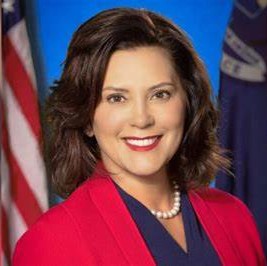
“I am working with partners across state government to ensure educators, parents, and students have the support they need during this time and to ensure our children who rely on school for meals have access to food,” Governor Whitmer said at a news conference. “I know this will be a tough time, but we’re doing this to keep the most people we can safe. I urge everyone to make smart choices during this time and to do everything they can to protect themselves and their families.”
– Michigan Governor Gretchen Whitmer
State officials worked with local agencies to make arrangements for low-income children to continue to get the lunches and breakfasts they had been receiving free at school.
Health care, congregate care, residential, and juvenile justice facilities were ordered to stop any non-essential visitors from entering.
On March 16, the Governor signed an order temporarily closing places where large numbers of people gathered such as theaters, casinos, bars and indoor recreational facilities. Restaurants could remain open but were limited to carry-out and delivery orders.
Recognizing the hardship the shutdowns would bring to thousands of workers and their families, she also signed an order expanding unemployment benefits.
The next day, the US logged its 100th known death from COVID-19, and the Trump administration asked Congress to send Americans direct financial relief by expediting emergency relief checks as part of an economic stimulus package.
CARES Act Passes
On March 25, the United State Senate passed the Coronavirus Aid, Relief, and Economic Security (CARES) Act. The House passed it on March 27. It was signed into law that day, becoming the largest economic recovery package in US history. The enormous bipartisan effort provided $2 trillion in aid to hospitals, small businesses, and state and local governments, and eliminated the Medicare sequester, the 2% across-the-board cut to all Medicare payments known as sequestration, until the end of 2021. To pay for the change, the bill would increase the fiscal year 2030 sequester cuts. The CARES Act also included a provision for making direct payments to Americans and expanding unemployment insurance.
Of that, the state of Michigan received approximately $3.9 billion, $36,706,205 of which was allocated to the state’s 83 counties.
On March 30, on the advice of a team of experts, Governor Whitmer cancelled K-12 school for the rest of the academic year. When possible, children lacking computers at home were given tablets on which to continue their studies. Seniors were given graduated status. All other students were given permission to move to their next grade in the fall. Public universities canceled or suspended in-person classes.
In a sudden cascade of events, workers found themselves identified as essential or non-essential, which distinguished between those with jobs that are crucial during an emergency and jobs that are not. Factories and office buildings shut down. Companies of all sizes across the state announced layoffs. Employees given permission to continue working from home often had to balance the demands of their job with the needs of their young children who were also at home. The newly unemployed looked for other work, even as job opportunities collapsed. Street traffic thinned to a trickle.
Wildlife experts observed that bird species that had adapted to singing louder amid the din of industry began singing softer and with a wider bandwidth in the relative quiet. The experts wondered how the birds’ new voices, which had become more like birdsongs recorded in the 1970s, would impact the birds’ territory battles, breeding patterns and rearing of their young. Ironically, their observations mirrored concerns about the sudden changes in the lives of American families.